All Products
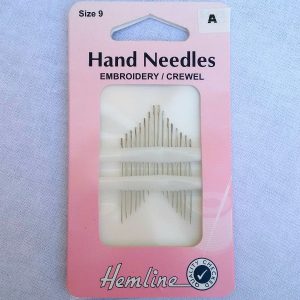
Crewel/Embroidery needles with their relatively large elongated eye and sharp point are most commonly used for embroidery projects. The smaller the needle size, the larger the size eye. The length of the needle is ideal, and only varies slightly as the needle size gets larger (eye size smaller) – the needle length is slightly shorter.
$2.90Add to cart
Betweens/Quilting needles are a shortish needle with a small rounded eye, used for making fine stitches in heavy fabric, and detailed hand stitching. Needle eye sizes get smaller as the size gets higher.
$2.80Add to cart
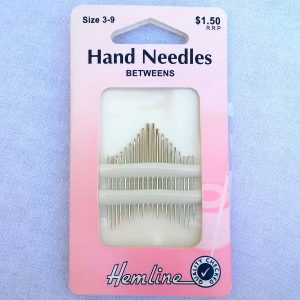
Betweens/Quilting needles are a shortish needle with a small rounded eye, used for making fine stitches in heavy fabric, and detailed hand stitching. Needle eye sizes get smaller as the size gets higher.
$2.80Add to cart
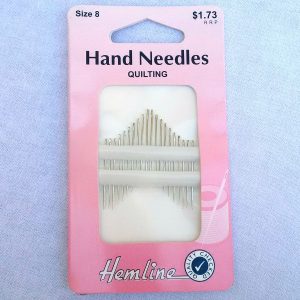
Betweens/Quilting needles are a shortish needle with a small rounded eye, used for making fine stitches in heavy fabric, and detailed hand stitching. Needle eye sizes get smaller as the size gets higher.
$2.80Add to cart
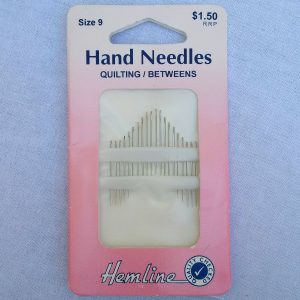
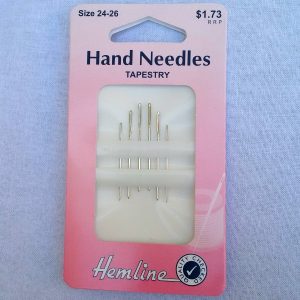
Tapestry needles have a large eye and a blunt tip. Used for embroidery, cross stitch projects on open weave, or loosely woven fabrics, the blunt tip passes through the fabric easily. The long eye allows for several strands of embroidery floss or thicker yarn to be used. Gold eye needles have been dipped in gold to give added strength to the eye. Needle eye sizes get smaller as the size gets higher.
$3.50Add to cart
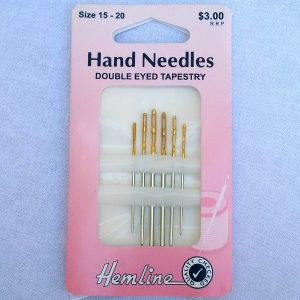
Tapestry needles have a large eye and a blunt tip. Used for embroidery, cross stitch projects on open weave, or loosely woven fabrics, the blunt tip passes through the fabric easily. The long eye allows for several strands of embroidery floss or thicker yarn to be used. Needle eye sizes get smaller as the size gets higher.
$2.75Add to cart
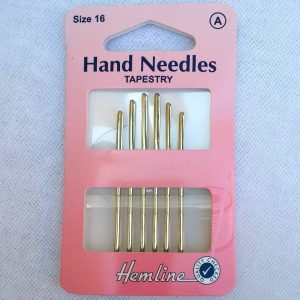
Tapestry needles have a large eye and a blunt tip. Used for embroidery, cross stitch projects on open weave, or loosely woven fabrics, the blunt tip passes through the fabric easily. The long eye allows for several strands of embroidery floss or thicker yarn to be used. Needle eye sizes get smaller as the size gets higher.
$2.75Add to cart
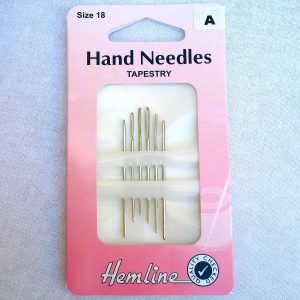
Tapestry needles have a large eye and a blunt tip. Used for embroidery, cross stitch projects on open weave, or loosely woven fabrics, the blunt tip passes through the fabric easily. The long eye allows for several strands of embroidery floss or thicker yarn to be used. Needle eye sizes get smaller as the size gets higher.
$2.75Add to cart
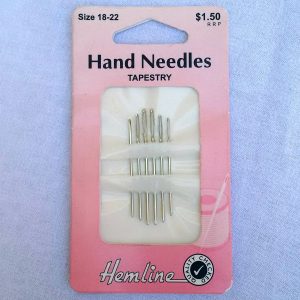
Tapestry needles have a large eye and a blunt tip. Used for embroidery, cross stitch projects on open weave, or loosely woven fabrics, the blunt tip passes through the fabric easily. The long eye allows for several strands of embroidery floss or thicker yarn to be used. Needle eye sizes get smaller as the size gets higher.
$2.75Add to cart
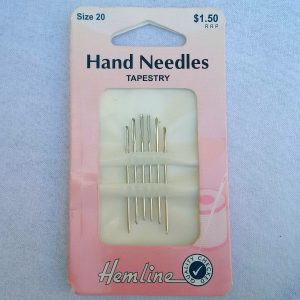
Tapestry needles have a large eye and a blunt tip. Used for embroidery, cross stitch projects on open weave, or loosely woven fabrics, the blunt tip passes through the fabric easily. The long eye allows for several strands of embroidery floss or thicker yarn to be used. Needle eye sizes get smaller as the size gets higher.
$2.75Add to cart
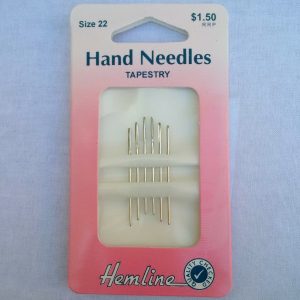
Tapestry needles have a large eye and a blunt tip. Used for embroidery, cross stitch projects on open weave, or loosely woven fabrics, the blunt tip passes through the fabric easily. The long eye allows for several strands of embroidery floss or thicker yarn to be used. Needle eye sizes get smaller as the size gets higher.
$2.75Add to cart
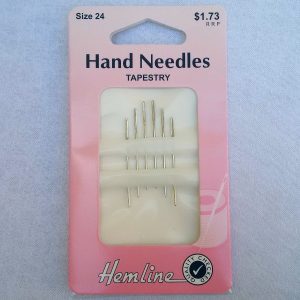
Tapestry needles have a large eye and a blunt tip. Used for embroidery, cross stitch projects on open weave, or loosely woven fabrics, the blunt tip passes through the fabric easily. The long eye allows for several strands of embroidery floss or thicker yarn to be used. Needle eye sizes get smaller as the size gets higher.
$2.75Add to cart